
Today, I picked up a book by Gabor Maté from Waterstones, In the Realm of Hungry Ghosts. Gabor Maté is the world renowned Canadian physician and bestselling author whose work explores addiction, trauma, childhood development, and mind & body health. I’ve been reflecting a lot lately on a tough few years, how society judges mental health and Maté’s approach felt like the perspective I needed right now.
Gabor has a background in family practice, palliative care and frontline addiction medicine. Maté is known worldwide for his compassionate approach, arguing that many addictions and chronic illnesses stem from unaddressed emotional pain and early‑life stress.
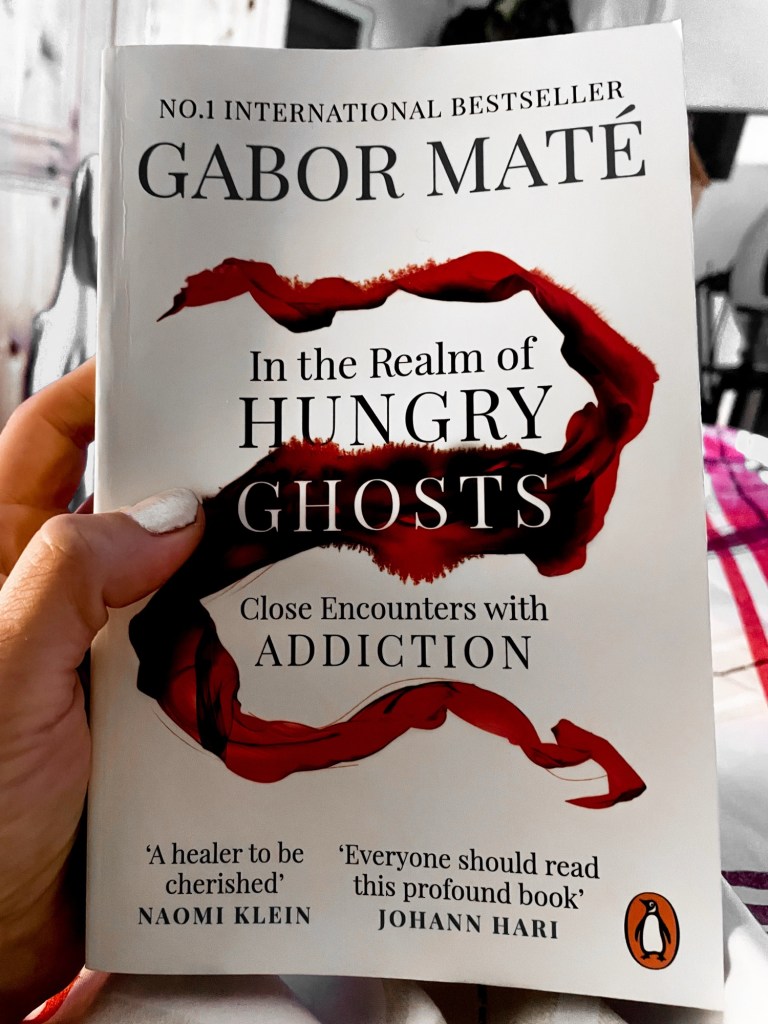
This book, In the Realm of Hungry Ghosts, is one of many influential titles including, When the Body Says No, and The Myth of Normal. Where Gabor Maté excels is blending neuroscience, psychology, and lived experience to challenge mainstream ideas about suffering and healing.
To Heal Addiction You Must Go Back To The Start
Gabor Maté
I’ll be breaking it down as I read, and I want to say upfront that this book isn’t only about drug or alcohol addiction. So many of us self‑soothe through things like food, spending, or scrolling, the kinds of habits we don’t label as addiction but often function the same way.
HUNGRY GHOSTS THE REALM OF ADDICTION
After the introduction, Gabor Maté first explains what he means by “hungry ghosts.” I think this is a good place to start. The first paragraphs explain how he takes the idea from Buddhism.
When Maté talks about the mandala and the Wheel of Life, he’s referring to a Buddhist image that shows six different realms. These realms aren’t places, they’re emotional states that humans move in and out of. One of them is the hungry ghost realm, which represents constant craving and never feeling satisfied.
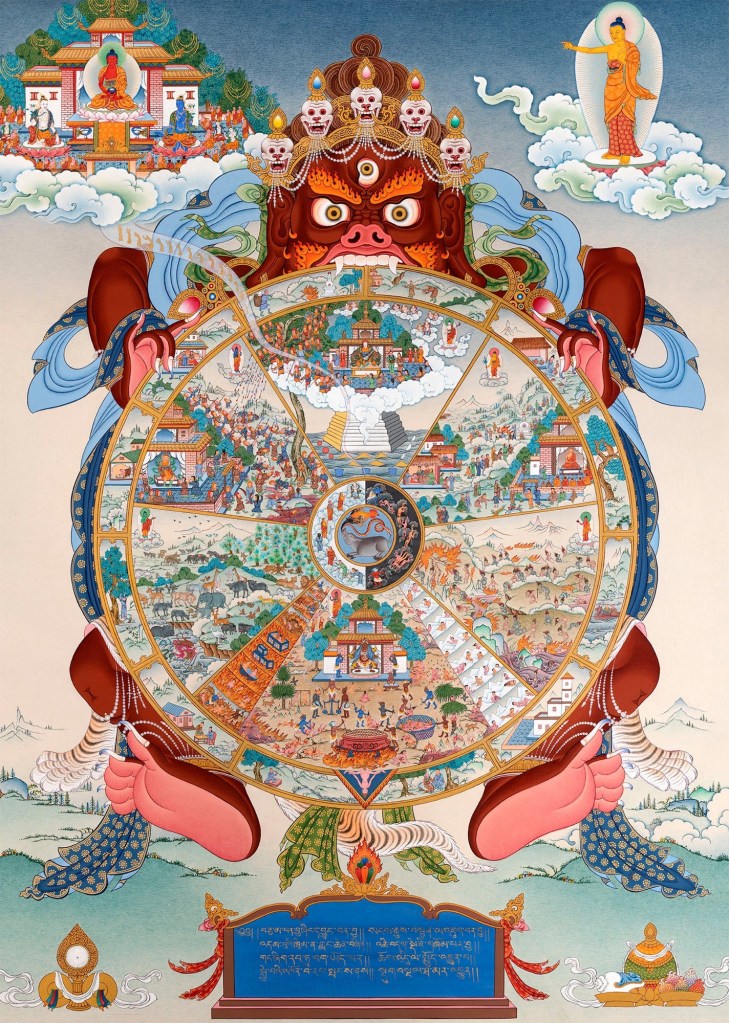
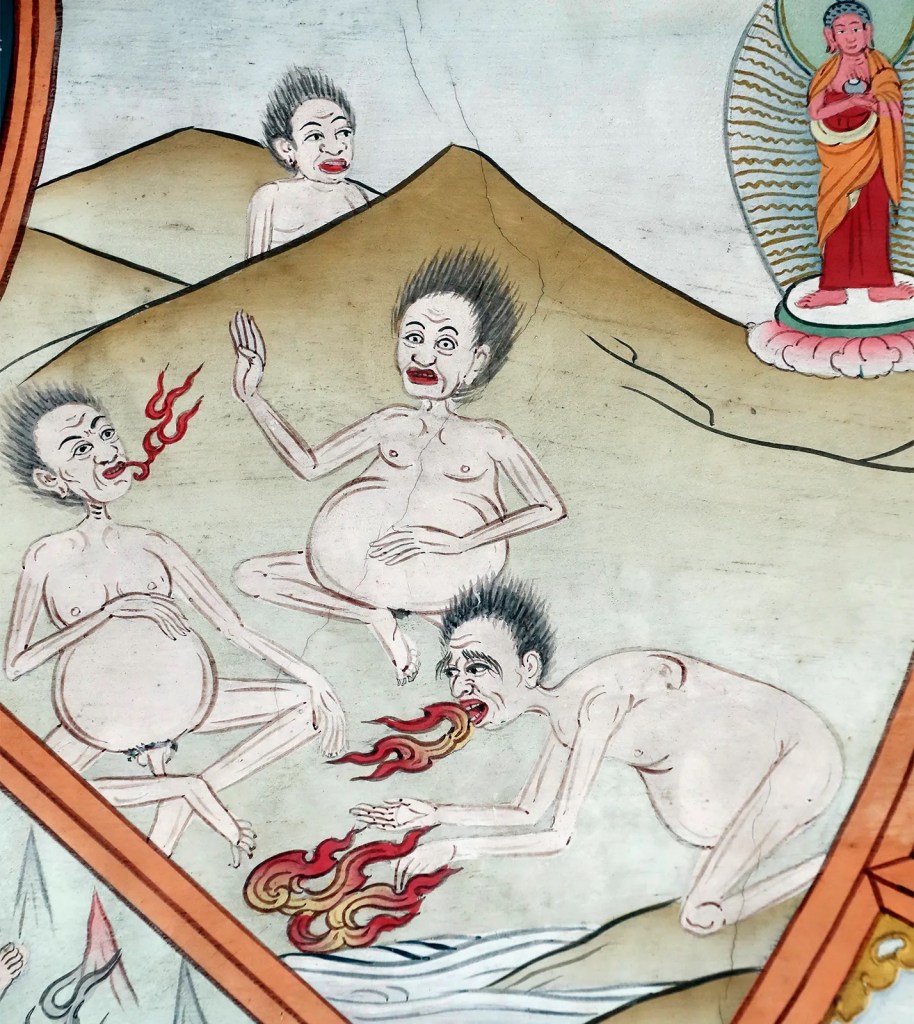
Maté uses this realm to explain addiction, because addiction feels like that, a deep hunger that nothing seems to fill. Each realm is represented by characters which portray our human existence and state of being. The hungry ghost realm are beings who have huge empty stomachs and tiny mouths. They’re always starving, always craving, and no matter what they take in, it never fills them.

This image of beings with huge stomachs and tiny mouths really resonated with me, it’s exactly how I feel some days when compulsively snack to quiet anxiety or trauma symptoms, only to end up feeling emptier. Maté’s metaphor made me pause and question my own ‘acceptable’ cravings, rather than just seeing them as harmless habits.
Maté uses this as a way to describe addiction not just drug addiction, but any behaviour where someone keeps reaching for something that never truly satisfies them.
It’s a picture of emotional hunger, not moral weakness.
He talks about the people he works with in Vancouver’s Downtown Eastside, one of the poorest areas in Canada, where many people struggle with addiction, trauma, homelessness, and illness. Instead of describing them as “addicts” in the way society usually does, with judgment or distance, he shows them as real people with histories, humour, intelligence, and pain. He’s showing us that addiction grows out of deep suffering and emotional disconnection, not because someone is weak or lacking willpower.
Maté makes it clear that addiction isn’t about pleasure or bad choices. It’s about trying to soothe something unbearable inside of us. People use substances or behaviours because, for a moment, it gives relief from loneliness, fear, emptiness, or memories they can’t face. The problem is that the relief doesn’t last, and the hunger comes back stronger. That’s the “hungry ghost” cycle.
He also begins to show that addiction is not an “us versus them” issue. He admits that he has his own compulsions, overworking, shopping, chasing achievement and that these behaviours come from the same emotional patterns, just expressed differently. This is extremely important because he wants the reader to see addiction as a spectrum that all humans fall on, not a category that only applies to certain people.
Reading about Maté’s own compulsions hit close to home for me, I’ve caught myself struggling with binge eating, doom scrolling and over exercising. It made me realise how these ‘small’ habits are my way of soothing the same kind of emptiness he describes. I think we’ve all caught ourselves in similar loops, sitting at our computer for hours, spending longer than we need to at the gym, all to avoid sitting with discomfort. It drove home that we’re all on this spectrum, which shifted how I view not just ‘addicts,’ but my friends, family, and even myself.
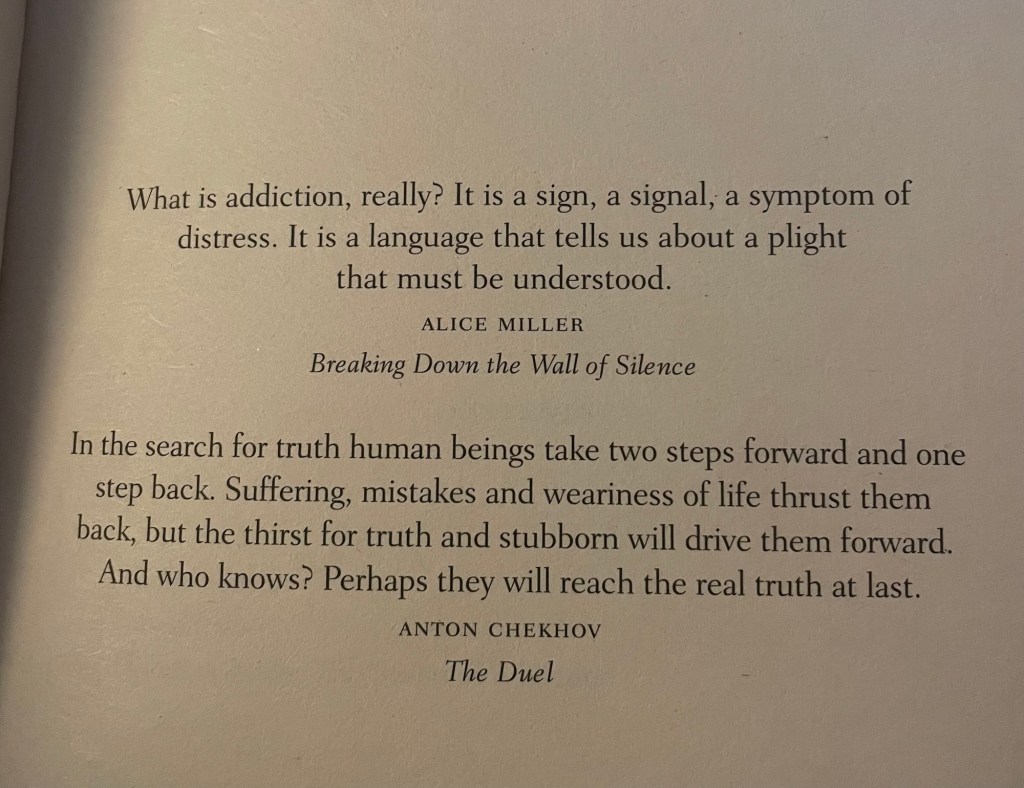
This first introduction softly introduces the idea that the real wound behind addiction is disconnection from self, from others, from safety and from love. When we don’t get our emotional needs met early on in life, or when we experience trauma or instability, we grow up with a kind of inner emptiness. Addiction becomes a way to try to fill that space or numb it. Some people are lucky, they have socially acceptable addictions, others turn to things that have a profound negative effect on their lives like drugs and alcohol.
By the end of the chapter, Maté has shifted the perspective from blame to compassion. Instead of asking “Why don’t they just stop?”, he wants us to ask “What pain are they carrying?” He’s inviting the reader into a more compassionate, realistic understanding of addiction one that sees the human being behind the behaviour and recognises that craving is a symptom of suffering, not a sign of weakness.
That line about shifting from ‘Why don’t they just stop?’ to ‘What pain are they carrying?’ really stopped me in my tracks. It reminded me of my own struggles and I’m starting to see my own cravings through a more compassionate lens. It’s left me with a mix of empathy and self-reflection, it’s already making me more mindful of my daily ‘hungry ghost’ moments.
What about you? Have you noticed similar patterns in your life, or has Maté’s work sparked any aha moments? Drop a comment below, I’d love to hear your thoughts as I dive into the next chapter.
 R20
R20 
Leave a comment